







In 2008, Lake of the Woods was placed on Minnesota’s impaired waters list after decades of pollution left the lake struggling with algae blooms and high phosphorus levels.
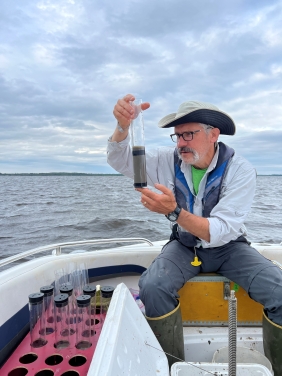
Back in 2010, the Minnesota Pollution Control Agency, or MPCA, launched major studies to understand the problem. Scientists examined sediment core samples from the lake bottom, measuring how much legacy phosphorus pollution had built up over generations. They also studied how easily that phosphorus could re-enter the water — where it acts like fertilizer for algae.
For much of the 20th century, sewage and industrial waste flowed into the lake from the Rainy River, severely degrading water quality. Even after those discharges stopped, phosphorus trapped in the sediment continued cycling back into the water.
Cary Hernandez, MPCA project manager, said “It’s trending in the right direction. To go from 39 down to 32 in about 10 years? That’s significant. That tells us the system is responding. The lake is slowly working through what’s there.”
Through wastewater upgrades, better land use practices, industrial reductions, and long-term regulatory efforts on both sides of the border, the Lake of the Woods is slowly responding and recovering.