Minnesota health officials say youth cannabis use continues to fall. The 2025 Minnesota Student Survey shows 96% of students report no cannabis use in the past month, and past-year use among eighth, ninth and 11th graders dropped nearly 58% since 2013. More students now see weekly cannabis use as harmful. State health leaders say the trend is encouraging but urge parents and trusted adults to start conversations early about risks and prevention.
The Minnesota National Guard is made of Approximately 13,000 people, and recruiters are always looking to add to this number. Minnesota National Guard 1st Sergeant Lance Meyer says recruiters have been successful doing this, as recruitment numbers are high across the state.
Meyer says the reason for enlisting varies from recruit to recruit.
More coming later this week from the Minnesota National Guard.
The Minnesota Department of Natural Resources is asking anglers, hunters and trappers to help improve the state’s regulations books.
The DNR will host a public webinar April 30 from noon to 1 p.m., where staff will answer questions and gather feedback on readability, images and overall ease of use of the annual hunting, fishing and trapping regulations.
Officials say the books help translate complex legal requirements into a format the public can easily follow, and user feedback is key to making improvements.
Comments will be accepted through May 7, including an online questionnaire, email and mail-in options.
For more information or to join the webinar, visit the Minnesota DNR regulations webpage.
Another proposal to crack down on fraud in Minnesota has stalled at the State Capitol.
DFL Representative Matt Norris says Republicans blocked his bill in a House committee that would expand the Attorney General’s fraud unit, with the federal government covering most of the cost.
The plan would add 11 investigators and three prosecutors to the office to target fraud in programs like Medical Assistance, where recent high-profile cases and audits have intensified pressure on lawmakers to act. Norris says the vote sends mixed signals:
The proposal relies on federal funding to pay roughly 75 percent of the staffing costs. Republicans pushed for an alternative funding amendment, but that also failed. Norris says the effort isn’t over:
Lawmakers in both parties agree Minnesota has a major fraud problem, but remain divided on how to fix it.
Congress has voted to overturn a 20-year mining withdrawal in northern Minnesota’s Superior National Forest, opening the door for the proposed Twin Metals copper-nickel mine near the Boundary Waters Canoe Area Wilderness, a federally protected wilderness that sits within one of the largest intact freshwater systems in the United States.
The Senate narrowly approved the measure and sent it to Donald Trump, who is expected to sign it. The project is owned by Chilean mining giant Antofagasta.
DFL Senator Jen McEwen says the fight now shifts to state leaders.
Supporters say the vote protects jobs and the Iron Range economy. Republican Congressman Pete Stauber called it a major victory, saying the bill reverses what he calls an illegal mining ban. Republican State Senator Robert Farnsworth praised the decision, calling mining a storied legacy passed down through generations.
But opponents warn the stakes are exceptionally high. The Boundary Waters is the most visited wilderness area in the country and sits atop a vast interconnected watershed that flows into the Rainy River Basin and beyond. Environmental groups say copper-nickel mining poses a unique risk because the sulfide ore can create sulfuric acid when exposed to air and water, potentially leaching heavy metals into lakes and rivers. They argue contamination could spread through hundreds of miles of interconnected waterways and be nearly impossible to clean up once it begins.
Democrats and environmental advocates also warn the minerals could ultimately be shipped overseas for processing, raising concerns the environmental risks would remain in Minnesota while the economic benefits could leave the country.
The issue now shifts to state regulators and a growing political battle over the future of mining near the Boundary Waters.
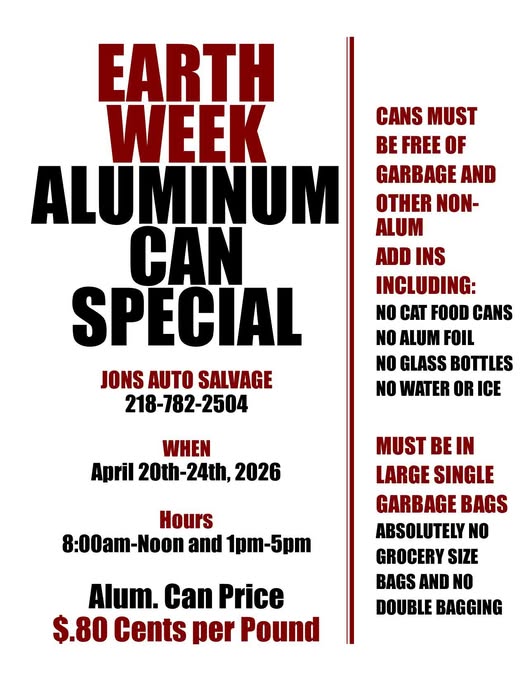
Jon’s Auto Salvage of Greenbush is marking Earth Week with a special push for recycling. From April 20th through the 24th, the business will pay 80 cents per pound for aluminum cans. Hours run from 8 a.m. to noon and 1 p.m. to 5 p.m. daily. Organizers say all cans must be clean and free of non-aluminum materials. Items like foil, glass, and food waste won’t be accepted. Participants are also asked to bring cans in large single garbage bags only.
Minnesota moms are invited to celebrate Mother’s Day weekend with a free fishing challenge.
The Minnesota Department of Natural Resources is hosting the virtual Minnesota Moms Fishing Challenge during Take a Mom Fishing Weekend, May ninth through tenth, when Minnesota moms can fish without purchasing a license.
Participants simply join the Minnesota Moms Fishing Challenge Facebook group and share a photo of each fish they catch during the weekend. All participants will be entered into a random prize drawing, and free webinars are available ahead of time to help anglers brush up on their skills.
The DNR says the goal is to welcome more women into the outdoors and build lasting memories on the water. Last year, more than 2,700 moms participated.
For more information, visit the Minnesota DNR Take a Mom Fishing webpage.
LifeCare Medical Center in Roseau is inviting residents from across northern Minnesota to come together for a morning focused on health, wellness, and community.
The annual Community Wellness 5K Walk/Run is set for Saturday, May 16th at Roseau City Park. The event welcomes all ages and fitness levels, with options to walk, run, or bike along a scenic local route.
The morning kicks off with a Kids Run at 8:45, followed by the 5K at 9:00. Organizers say the event is about more than just exercise—it’s about bringing together neighbors from Roseau and Lake of the Woods counties while raising awareness for mental health.
Participants can expect chip timing, awards, music, and refreshments, with free coffee and hot chocolate available on site.
Proceeds will support local healthcare initiatives through the LifeCare Health Care Fund.
Pre-registration is encouraged by May 6th to guarantee a long-sleeve event T-shirt. More information is available at LifeCare Medical Center’s website.
By Mani Souphom – R & J Broadcasting, Inc. | Thursday, April 15, 2026
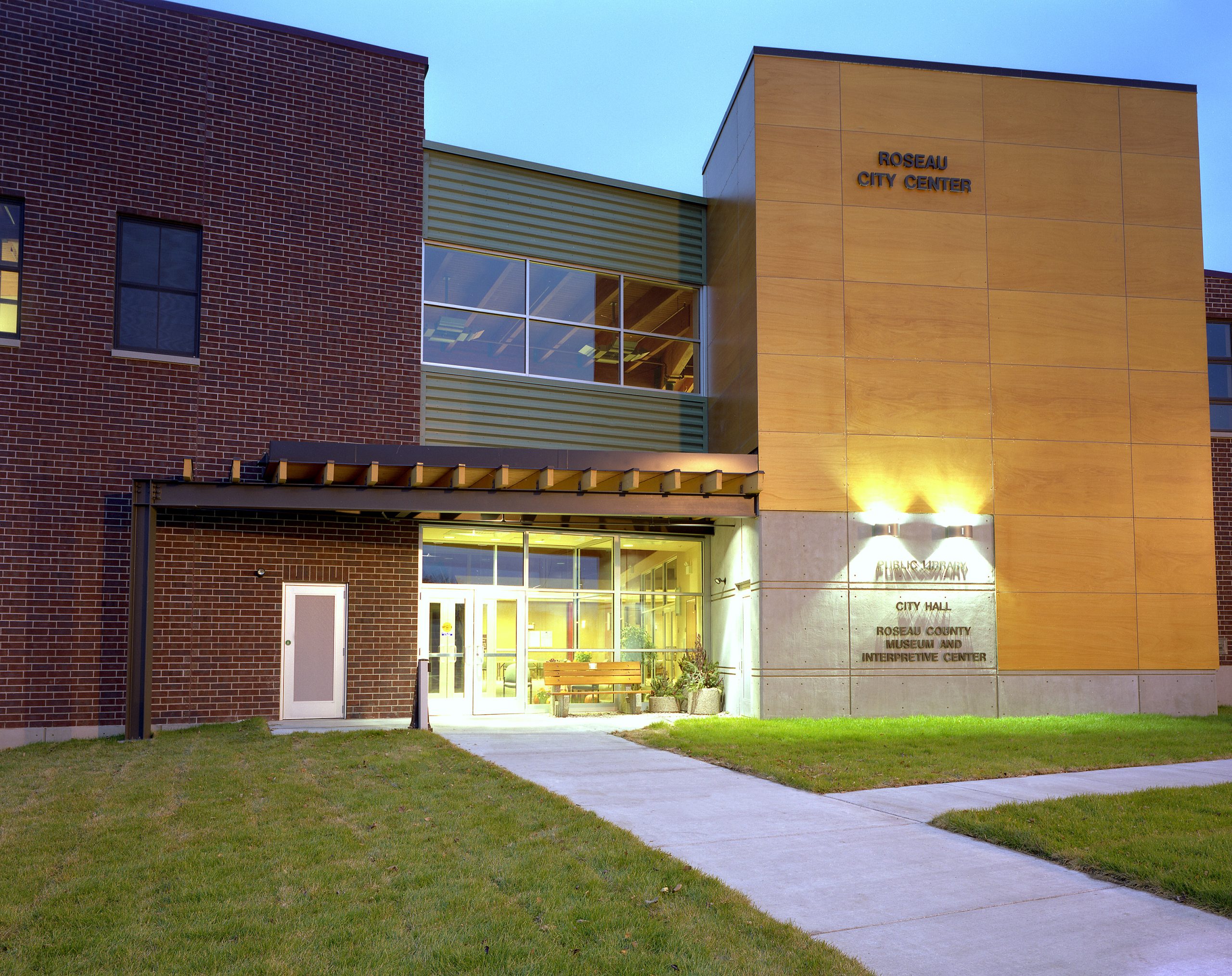
ROSEAU, Minn. – The City of Roseau received an unmodified audit opinion, the highest level of assurance issued by independent auditors BradyMartz CPA, confirming the city’s financial statements are fairly presented and in accordance with applicable accounting standards.
The audit, presented by CPA Amanda Scanson of BradyMartz, found no indications of fraud, no disagreements with management, and no uncorrected misstatements. Officials say the results represent a clean financial report for the fiscal year.
The report did include one finding related to financial statement preparation. Auditors noted this is a common occurrence for smaller municipalities where external auditors assist in drafting the financial statements as part of the audit process.
Dan Fabian said the outcome underscores the city’s strong financial position and consistent cooperation with auditors throughout the review.
The city also underwent a required federal single audit after expending more than $1 million in federal funds. That review included testing of programs such as economic adjustment assistance and highway planning, totaling roughly $2.9 million in expenditures. Auditors reported no major issues with compliance.
Fabian highlighted that city finances remain stable overall, with a reported year-end cash position of about $7.8 million across government funds, though some individual funds carried negative balances due to internal borrowing between city accounts.
Officials noted that while the general fund ended the year with an overall deficit position, much of the city’s revenue continues to come from property taxes and state aid, with federal revenue levels fluctuating based on grants. Expenditures were led by public safety and general government costs in 2025.
The audit also showed the city’s unassigned fund balance as a percentage of expenditures fell below the commonly recommended 10–20% range due to the year’s financial swing.
Fabian also pointed to broader financial operations, including relatively steady performance in proprietary funds such as the city’s utility and liquor operations. Auditors noted stable revenues and expenses, along with continued internal transfers and debt activity.
BradyMartz officials said the city fully complied with audit requirements and cooperated throughout the process, with no difficulties encountered during fieldwork or reporting. They added that Roseau’s size requires outside CPA support for audit and financial statement preparation, a standard practice for municipalities of its scale.
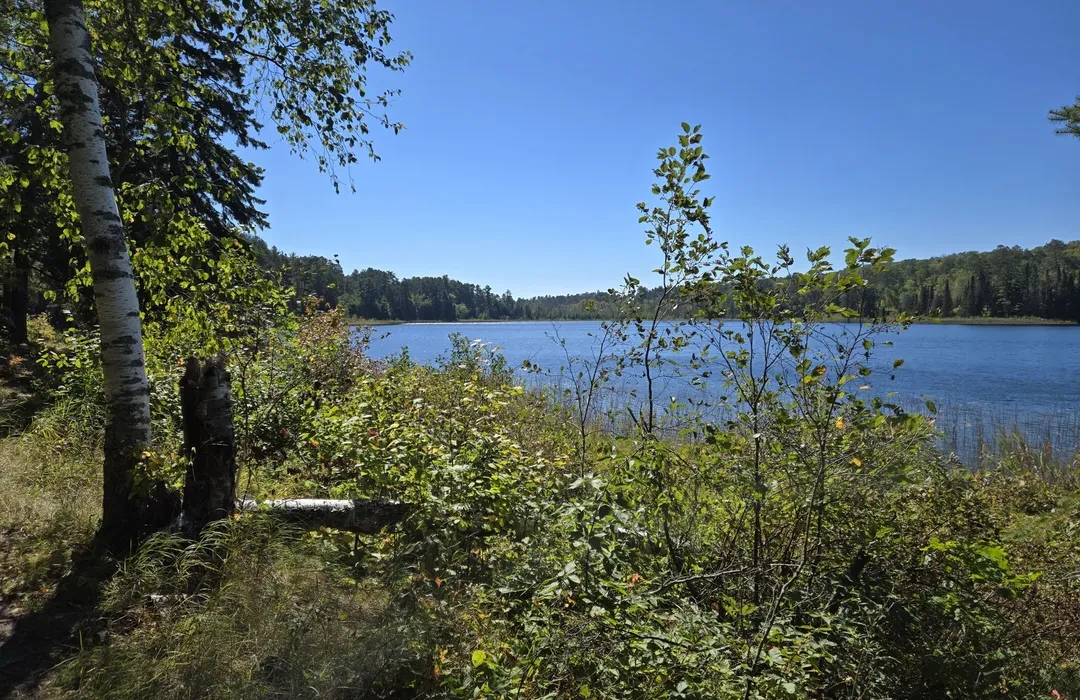
The Spring season is officially underway at Itasca State Park, which means that now’s a great time to see what the park has to offer. Itasca State Park Naturalist Sandra Lichter says spring is a great time to visit the park, as there’s something new to see each week.
Lichter also gives us a peek at what else will be changing in nature this month.
More information about amenities and services at Itasca State Park can be seen on the park’s webpage on the Minnesota DNR website.